
.png)
The Women of Hip-Hop Are Here to Stay
- Deidre Annette

- Feb 27, 2024
- 21 min read
Every era of hip-hop has had its legends, its innovators, its rulebreakers. What’s different about this moment is that women aren’t just participating — they’re defining the sound. For decades, hip-hop has been loud, disruptive, and impossible to ignore, and the women who shape it are no exception. Women aren’t “breaking in” anymore. They’re running the show.

In the historical echoes of hip-hop, the male vibrato has set the rhythm since the early 1970s. Their voices, their stories, their swagger shaping the genre’s earliest identity. But in recent years, there has been a revolutionary remix, as women have broken barriers and rewritten the beat. Unapologetically stepping into the spotlight, we're witnessing a remarkable shift in this genre as women claim their space and redefine the narrative.
This resurgence of women in hip-hop isn't just a musical evolution; it's a cultural shift that acknowledges and celebrates diversity in the music industry. This movement isn’t about “letting women in.” Women have been here. From MC Sha-Rock to Salt-N-Pepa, Queen Latifah, Missy Elliott, Lil’ Kim, Lauryn Hill, Trina, and the countless innovators who pushed the genre forward, often without receiving equal credit. What’s different now is the scale. Women today are defining mainstream hip-hop’s sound, aesthetics, storytelling, business models, and cultural conversation. Their lyrics confront double standards, reclaim sexuality, critique power structures, and tell truths with a rawness and wit that resonate with a generation raised on digital activism and cultural transparency.
A reflection of audiences' evolving tastes and preferences, these women aren't just artists but trailblazers, actively contributing to a more inclusive and empowering definition of femininity within the genre. In this article, we’ll break down how we got here: the history of female rap and the path that made this moment possible; the modern landscape shaped by artists like Cardi B, Megan Thee Stallion, GloRilla, Doja Cat, Ice Spice, and Sexyy Red; and the pros and cons of the current wave, including how feminism, marketing, respectability politics, and the industry’s shifting power dynamics all collide. Because the women of hip-hop aren’t a phase or a phenomenon. They’re the present and the future — and the culture is stronger because of it.
Women in Hip-Hop Aren’t a Category. They’re the Culture.
In the expansive realm of hip-hop, this revitalization isn't defined by a singular style or voice but is marked by a diverse array of talents, each bringing a unique flavor to the table. From Latto’s sharp, self-assured delivery to the City Girls’ signature take-no-prisoners anthems, Flo Milli’s effortless punchlines, and Doechii’s genre-blurring creativity, this wave of artists and their lyrics provides a powerful lens for critiquing societal norms and advocating for change, challenging the status quo with every raunchy yet meaningful verse.

The truth is simple: “female rap” isn’t a genre. It never has been. It’s a convenient phrase and an oversimplification that flattens an entire universe of voices into a single category. Women in the 2020s are operating across every lane. Trap, drill, pop-rap, alt-rap, R&B hybrids, social satire, and full-on performance art. Today, we aim to explore the impact of these voices and shed light on the significant discrepancy in how mainstream media portrays them. This shift is not just about breaking gender barriers; it represents a cultural evolution that challenges stereotypes and expands the definition of hip-hop. If anything, “female rap” is a movement defined by narrative power, creative range, and the refusal to shrink for anyone’s comfort.
Mainstream media plays a significant role in shaping and influencing how the public perceives women in hip-hop. No one calls drill “male rap.” No one calls lyrical rappers “men’s hip-hop.” Yet when women rap, the industry treats them like a subgenre instead of full participants shaping the culture and the collective understanding of what is culturally relevant or significant within the genre. And within that expansion, they’ve built new subgenres that didn’t exist before, including one of the most culturally charged: pussy rap.
Often mislabeled as “raunch rap,” “stripper rap,” or “sex-positive rap,” pussy rap is more than explicit lyrics. It’s a mode of storytelling rooted in agency, desire, and ownership of the female gaze. Artists like KenTheMan, Sexyy Red, the City Girls, and Sukihana use humor, wit, and radical transparency to flip the dynamics that once objectified them. Editorial decisions, news coverage, and public opinion contribute to narratives that can elevate or diminish an artist's image. The choice of coverage, language, and selected images frames an artist in the public eye, with positive or negative framing significantly impacting an artist's career and public perception. Instead of being sexualized by the culture, they sexualize the world right back on their terms, for their pleasure, and with their profit in mind.
This is where fourth-wave feminism comes in. In understanding how mainstream media operates, theories such as Laura Mulvey's "male gaze," Stuart Hall's reception theory, and Angela McRobbie's youth subculture theory offer valuable insights into the power dynamics, gender biases, and subcultural influences at play. Acting as gatekeepers, media outlets determine which artists receive visibility, influencing who gets mainstream recognition and impacting the diversity of voices heard. Interviews and features serve as platforms for artists to share their stories; however, how these interactions are edited and presented can significantly influence narratives, reinforcing or challenging stereotypes based on the choices the media makes.
Fourth-wave feminism centers on bodily autonomy, digital activism, self-definition, and dismantling respectability politics. Women in hip-hop embody that every time they: claim their own narratives, monetize their image instead of being exploited by it, celebrate desire without shame, reject moral policing, or speak openly about power, pleasure, and survival What some critics dismiss as “too explicit” is often just too honest for people who haven’t updated their understanding of women’s autonomy.
Mainstream media coverage is directly linked with an artist's commercial success and shapes the dynamics of industry trends within the world of hip-hop. And the irony? The more the culture tries to label women as a niche, the more obvious it becomes: women are not a side-genre of rap. They’re its blueprint for evolution. Women today aren’t forming a category separate from hip-hop. They’re expanding hip-hop’s vocabulary. They’re building subgenres that didn’t exist. They’re changing the rules of expression, performance, and cultural messaging.
Music reviews, fashion trends, lyrical breakdowns, and cultural critiques shape how artists and audiences understand the genre. Positive media attention not only boosts an artist's public image but can also lead to increased album sales, brand endorsements, and other lucrative opportunities within the entertainment industry. Historically, the industry has favored a specific ideal that adheres to conventional beauty standards and perpetuates certain behavioral expectations. This selective focus sometimes undermines the diverse talent within the genre, as mainstream media tends to spotlight artists who fit this mold. While these artists undoubtedly bring talent to the stage, a focus on specific traits can overshadow the diverse range of voices and styles that women in hip-hop have to offer.
Why This Moment in Hip-Hop Matters
What’s happening in hip-hop right now isn’t just a surge of talented women. For the first time, women aren’t being treated as exceptions to the genre. Their presence is no longer a novelty or a marketing trend; it’s evidence that audiences are demanding artists who reflect the world they actually live in.
Stereotypes and traditional gender norms play a significant role in shaping how women in hip-hop are portrayed. The connection between stereotypes and gender norms may include assumptions about appearance, behavior, and roles that align with traditional gender norms. What makes this moment historic isn’t just the number of women succeeding; it’s that their success is reshaping the genre from the inside out. Hip-hop isn’t witnessing a “wave” of women. It’s witnessing a shift in power.
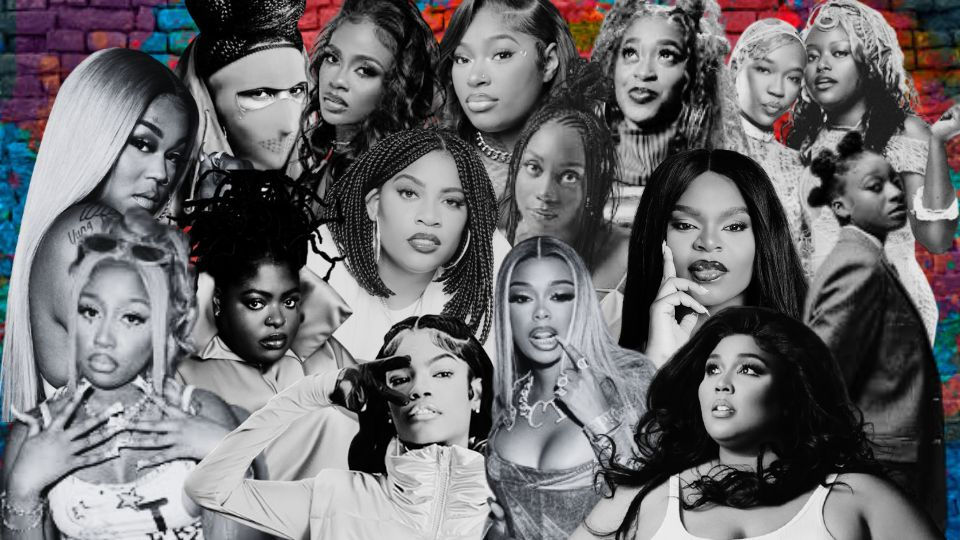
The media's preferred narrative prioritizes artists who conform to conventional beauty standards. Artists like Megan Thee Stallion, Latto, the City Girls, and others have conformed to these standards that align with society's expectations of how women, particularly Black women, should look and present themselves. Slim or curvaceous body types, styled hair, elaborate makeup, and attention-grabbing outfits maintain a youthful look perceived as traditionally beautiful and trendy, and adhere to current style norms.
In an era shaped by social media visibility, global fandoms, and algorithm-driven discovery, today’s rappers carry cultural weight far beyond the charts. Artists like Doechii, Baby Tate, and Doja Cat, among others, have been celebrated for embracing their uniqueness and challenging traditional beauty standards deemed acceptable for women. The media often favors female artists who adhere to traditional behavioral expectations, reinforcing established gender roles, and highlights artists who embrace a certain level of sensuality or sexuality within their performances and public personas. The media also disproportionately scrutinizes the personal relationships, family dynamics, lifestyle choices, or personal challenges of female artists compared to their male counterparts.
When women dominate conversations, influence trends, and outperform expectations, it disrupts an industry built on the assumption that men are the default and women are the accessory. Women aren’t simply making music; they’re reclaiming narrative authority in a genre that once marginalized them, using their platforms to challenge power structures and vocalize truths that mainstream culture has historically ignored. Their visibility forces labels, media outlets, and gatekeepers to reconsider what sells, who gets marketed, and who deserves investment. This moment also matters economically. Women in hip-hop are charting new lanes in brand partnerships, fashion houses, festival headlining, digital strategy, and entrepreneurship, areas where they were once excluded.
Not New, Just Finally Heard
Hip-hop didn’t begin as a boys’ club. In the Bronx of the 1970s, hip-hop emerged from block parties, sound systems, and storytelling, shaped by Black and Latino youth responding to economic neglect and social displacement. From the very start, women were present as DJs, MCs, dancers, organizers, and cultural architects, even if their contributions weren’t always documented with the same care or respect as their male counterparts.

As hip-hop moved from parks and rec rooms into studios and record labels, pioneers like Salt-N-Pepa, MC Lyte, Queen Latifah, and Yo-Yo laid the groundwork for feminist ideals within hip-hop. The industry, not the culture, started deciding whose voices were profitable, marketable, and worth amplifying. Invited in, edited down, or pushed to the margins rather than recognized as foundational contributors, these women proved that female voices had a place in hip-hop by breaking through the barriers.
Their success inspired future generations of female artists, setting the stage for the modern wave of women in hip-hop who continue to reshape the genre today. By the mid-1990s, hip-hop was no longer an underground experiment. It had become a mainstream phenomenon. While the genre has historically been male-dominated, Da Brat’s debut album, Funkdafied, made history as the first solo female rap album to go platinum. Her success wasn’t packaged around softness or sexual appeal. It was raw, confident, playful, and technically sharp. She occupied a space that had previously been reserved almost exclusively for men. The industry didn’t know what to do with her, but the audience did.
At the same time, Lady of Rage emerged from Death Row Records with a voice and presence that cut through the noise. Her delivery was aggressive, commanding, and impossible to ignore. Yet despite her undeniable talent and cultural impact, Rage’s career was repeatedly delayed and sidelined. Proof that women could succeed, but only within narrow boundaries set by the industry. If they were too hard, too loud, too independent, or too difficult to categorize, support became conditional. Their visibility was celebrated, but their longevity was treated as optional.
As hip-hop grew from marginalized communities, it became a powerful platform for social commentary and self-expression. In contrast to earlier decades, 1995 was the year female rappers stopped asking for space and started taking it — sexually, lyrically, and culturally. While sexual empowerment has become a prominent theme in modern hip-hop, it can sometimes be seen as a double-edged sword. Women who embrace their sexuality are celebrated but may also face criticism for being overly sexual or commodified.

In 1995, Lil’ Kim and Foxy Brown emerged with unapologetic confidence that mirrored — and mocked — the hypermasculinity dominating hip-hop at the time. Their lyrics flipped the script on desire, control, and ownership. They didn’t shy away from sexuality; they weaponized it. In a genre where men had long rapped explicitly about women’s bodies, Kim and Foxy made their own bodies sites of agency rather than exploitation.
At the same time, women in Southern hip-hop were carving out a lane that didn’t rely on glamour at all. Mia X, the first lady of No Limit Records, balanced motherhood, business, and artistry while navigating an industry that rarely made room for women beyond novelty or controversy. Gangsta Boo and La Chat, both tied to Three 6 Mafia, brought raw, violent, horror-tinged realism into the spotlight. Their lyrics were grim, aggressive, and fearless. Matching their male counterparts bar for bar without softening the message. These women shattered the myth that there was only one way to be a woman in hip-hop. This era didn’t just challenge hip-hop’s gender norms. It exposed the double standard at the heart of the culture: when men rapped about sex and violence, it was authenticity. When women did it, it was controversial.
By the mid-to-late ’90s, the question was no longer whether women belonged in hip-hop, but whether hip-hop was ready to recognize the depth, range, and complexity of what they were offering. That reckoning arrived in the form of Lauryn Hill. Lauryn’s influence wasn’t just musical. Her lyrics centered on Black womanhood, spirituality, love, and self-worth without diluting their complexity. She proved that depth could be commercially viable, that introspection could chart, and that women didn’t have to choose between consciousness and success. In doing so, she gave future artists permission to be multidimensional without apology.

As the late 1990s approached, the industry leaned heavily into what many now recognize as the “only one” theory: the idea that there could be only one woman at a time in mainstream rap, carefully positioned, tightly controlled, and marketed as the exception rather than the rule.
Missy Elliott shattered that logic almost immediately. Debuting in 1997, Missy reimagined what a woman in hip-hop could look like, sound like, and control. Her futuristic visuals, playful lyricism, and genre-defying production rejected hypersexualization as a requirement for success. Missy wasn’t competing for a seat at the table; she built her own and produced for others while doing it.
Around the same time, Eve emerged with a different kind of authority. Her affiliation with Ruff Ryders and sharp, street-centered lyricism placed her squarely in spaces typically reserved for men. Eve wasn’t framed as novelty or contrast; she was positioned as an equal. Meanwhile, Trina’s arrival toward the end of the decade challenged respectability politics head-on. Dubbed “The Baddest Bitch,” Trina leaned into sexual confidence without apology, reclaiming desire as power long before the culture was ready to name it that way.
But for every woman who broke through, several others were quietly pushed aside. Queen Pen, Amil, and Charli Baltimore all showed undeniable skill, presence, and cultural relevance, yet their careers were often framed as temporary or overshadowed by their male counterparts. They weren’t marketed as stars with longevity, but as placeholders in an industry that still believed women’s success needed limits.
Today’s hip-hop landscape features a far greater number of successful female artists. These artists not only dominate the charts but also offer a range of perspectives on womanhood, empowerment, and sexuality. This new feminist climate has allowed for more nuanced representations of women in hip-hop, where they can be both sexually liberated and politically engaged. By the early 2000s, the “only one” theory hardened into an industry practice, where multiple women could exist in the culture at the same time, but only one would be allowed sustained mainstream investment.

Rah Digga stood as one of the most lyrically respected MCs of the era, earning credibility through pure skill rather than image. As part of Flipmode Squad, she proved that technical mastery and sharp pen work weren’t gendered traits. Yet she was rarely positioned as a long-term commercial priority. Respect didn’t translate into industry backing.
Khia’s rise told a different story. Her breakout success challenged norms of sexuality and authorship, but the industry quickly reduced her to shock value. Instead of supporting her as an artist with range, she was framed as a moment. Another example of how women who disrupted comfort zones were often contained rather than cultivated.
Ms. Jade and Jacki-O both emerged with strong co-signs and regional momentum, but their careers were marked by inconsistency in promotion and support. They weren’t failures; they were casualties of an industry unwilling to invest in more than one woman at a time. Shawnna, despite her sharp wit and commercial appeal, was often treated as a feature or accessory rather than a front-facing star.
Then there was Remy Ma. Undeniable, uncompromising, and impossible to ignore. Her presence challenged nearly every stereotype placed on women in rap. Aggressive without apology, technically gifted, and unapologetically herself, Remy didn’t fit into the narrow lanes the industry preferred. Her success made it clear that the issue was never talent — it was control. Women were allowed in, but rarely allowed to stay. Each breakthrough came with an expiration date, and each woman was positioned as a replacement rather than part of a lineage. The culture was ready for someone who could out-rap, out-market, and outlast the system. Someone who could exist in multiple lanes at once and refuse to be reduced.

In 2006, “Chicken Noodle Soup” by DJ Webstar and Young B became a cultural phenomenon, soundtracking dances, street corners, and early viral hip-hop moments. A year later, Lil’ Mama’s “Lip Gloss” exploded with similar force, pairing youthful confidence with undeniable commercial success. Yet despite their popularity, Young B and Lil’ Mama were framed as novelties or youth-driven trends rather than artists worthy of sustained development. The industry celebrated the singles but hesitated to build careers around the women behind them. Success, in these cases, didn’t translate into protection, longevity, or creative freedom.
The industry still prioritizes women who fit certain beauty standards or who express their sexuality in a particular way while sidelining more diverse voices and styles. When Nicki Minaj emerged in 2008, she absorbed the space the industry allowed. Her technical skill, theatricality, and genre-blending made her undeniable, but her positioning also revealed how narrow the industry’s vision still was. Nicki built her reputation on mixtape-era lyricism, out-rapping peers in a space where women were rarely centered and bridging the gap between mixtape rap and global pop superstardom. Nicki’s rise effectively broke the industry’s “only one” rule, opening the door for multiple women rappers to succeed simultaneously.
More Voices, Same Ceiling
Angela McRobbie’s youth subculture theory highlights how important it is for female artists to challenge gender norms and actively carve out space for themselves. This is evident in how modern female rappers have reclaimed their sexuality and used it as a tool of empowerment. Through their lyrics, performances, and public personas, they challenge traditional gender norms, celebrate body positivity, and speak out against systemic oppression. By owning their narratives, they redefine what it means to be powerful women in a historically male-dominated genre.
By the early 2010s, the industry began signaling that space was opening up for more women in hip-hop, but the reality was far more complicated. While Nicki Minaj remained positioned as the singular exception, a new wave of women emerged across wildly different sounds, aesthetics, and platforms. The problem wasn’t a lack of talent or originality. It was that the industry still hadn’t figured out how to support more than one woman at a time.
Artists like Kreayshawn and Honey Cocaine rose alongside the internet-rap boom, benefiting from viral visibility without long-term institutional backing. Azealia Banks blurred the lines between rap, house, and punk attitude, while Rapsody and Angel Haze pushed lyrical depth and social consciousness in a landscape that rarely rewarded it. Iggy Azalea and Dej Loaf found commercial attention, but often at the cost of being boxed into narrow narratives about authenticity, image, or relatability.
This period proved that women could thrive across every lane of hip-hop, and it exposed the structural limits that kept them from rising together. Women were visible, talked about, and even momentarily celebrated, but rarely sustained. Labels treated success as a fluke rather than a foundation, and the media framed these artists as experiments instead of investments. This period wasn’t a failure, and what came next wasn’t just a breakthrough.

By 2016, something had finally begun to change. The industry could no longer pretend there was room for only one woman at the table. Dreezy brought sharp lyricism and emotional precision to Chicago’s rap lineage, blending vulnerability with technical skill in a way that resisted easy categorization. Young M.A. disrupted every expectation at once: gender presentation, sexual politics, and industry norms. All while delivering raw street narratives that demanded respect without explanation. Little Simz, operating outside the U.S. industry machine, proved that global hip-hop didn’t need American validation to thrive, using introspection and political clarity to redefine what commercial success could look like. Lizzo, initially emerging as a rapper before crossing genre lines, challenged the industry’s standards of body, beauty, and joy, turning self-celebration into a radical act.
Even as women became more visible than ever, the ceiling for women in hip-hop didn’t disappear. Increased visibility created the illusion of progress, but “female rappers” were still framed as exceptions rather than proof that the industry was changing. Women were expected to outperform their male peers to receive the same level of investment, radio support, or longevity. Label budgets, touring opportunities, and award recognition remained uneven, reinforcing the idea that women had to justify their presence repeatedly, even after proven success. Streaming had fractured the old gatekeeping model, social media had collapsed the distance between artist and audience, and women were using both to bypass traditional validation entirely.
Many women in hip-hop today are using their platforms to advocate for issues that go beyond music, such as racial injustice, gender inequality, and LGBTQ+ rights. Cardi B stood at the center of this moment, not because she was the only woman succeeding, but because she embodied the new rules of the game. Her rise wasn’t polished or industry-engineered. Tracks like “WAP” not only reclaim female sexuality but also challenge societal taboos surrounding women’s pleasure, positioning it as a source of empowerment. Cardi didn’t soften herself to be legible, and her success proved that relatability, personality, and narrative control could be just as powerful as technical perfection.

Around her, a constellation of artists flourished. Known for her viral hits and bold style, Saweetie leveraged social media and strategic brand partnerships to make herself a cultural force both in and out of the studio. With a mix of charisma, sharp wordplay, and business acumen, she has become a recognizable voice of modern hip-hop for the new generation. Melii and Stefflon Don brought global and bilingual influences into the mainstream conversation, while Kamaiyah quickly earned a reputation for her West Coast flow and playful take on party rap. Detroit’s own Kash Doll made waves with her confident delivery and bold storytelling, blending streetwise authenticity with mainstream appeal. Killumantii’s gritty Atlanta trap and Princess Nokia’s Afro-Indigenous, punk-infused style highlight the culture’s expanding sound and perspective.
By 2018, the groundwork laid by Nicki, Cardi, and others had begun to pay off. Women in hip-hop were no longer just flashes in the pan; they were consistently charting, headlining festivals, and reshaping cultural trends. Artists like Latto, Doja Cat, Rico Nasty, Leikeli47, and City Girls began to define a bold, experimental, and unapologetically expressive sound. Social media and streaming platforms amplified an artist’s reach, allowing them to bypass traditional gatekeepers and connect directly with fans. Chicago’s Noname blends jazz-infused flows with sharp social commentary, using her social media platforms to amplify activism, engage fans, and shape conversations beyond music. Women in hip-hop today offer a diversity of representations, influencing how younger generations understand feminism, self-expression, and resistance. Another powerful example is Tierra Whack, who uses her music to push the boundaries of creativity and individuality. Her album Whack World not only highlights her lyrical prowess but also her ability to critique societal expectations of women without conforming to mainstream ideas of beauty or success.
Women Leading Hip-Hop Now
After decades of breaking barriers, defying stereotypes, and challenging the status quo, women in hip-hop are no longer anomalies. From the “only one” era to the rise of subgenres like pussy rap and drill, female artists have continuously redefined what it means to be powerful, sexual, and unapologetically themselves on the mic. Fourth-wave feminism and youth subculture theory help us understand how they reclaim agency over their narratives, flipping the gaze and challenging media framing.
Despite historical ceilings and industry bias, today’s women in hip-hop operate across lanes, proving that their creativity, vision, and cultural influence extend far beyond labels. However, the power remains in these artists’ ability to control their own images and narratives, allowing audiences the agency to decode the messages in varied ways. By doing so, they are reshaping the future of hip-hop and youth culture, providing young women with empowering role models and a more inclusive space to express their identities.
Bodily autonomy, digital activism, and self-definition aren’t just theoretical. Whether it’s through raunchy, sex-positive storytelling, socially conscious commentary, or viral hits that dominate digital culture, women are proving that hip-hop’s evolution relies on their voices. The result is not just new hits, it’s a redefinition of hip-hop itself, one that values innovation, inclusion, and authenticity. Proving that the industry can — and must — support multiple women simultaneously.

Women leading hip-hop today didn’t arrive here by accident. From Megan Thee Stallion’s powerhouse presence to Lay Bankz’s playful swagger, the modern roster is as diverse as it is dominant. Their success is proof that women can lead, innovate, and thrive simultaneously across multiple subgenres, breaking long-standing industry ceilings. Despite their success, women still face pressure to conform to specific beauty standards, sexualized imagery, or novelty “trends” to gain visibility. While the field is larger than ever, the “only one” mentality still lingers, with labels and media often highlighting a few artists while leaving others underrepresented. Even with streams, endorsements, and viral hits, disparities in pay and industry recognition persist compared with male peers. It’s clear that women today hold more power, influence, and creative freedom than ever before, but challenges remain. Recognizing both sides of the coin helps us appreciate their achievements and understand the work still needed to ensure equity in hip-hop.
What we’re witnessing now isn’t a trend or a temporary spike in visibility; it’s the payoff of artists who built their own lanes when none were offered. And if this era is still being questioned, the evidence is already there. This moment is the result of decades of pressure, persistence, and refusal to disappear when the industry tried to make space for only one woman at a time. This is what it looks like when women aren’t waiting for permission.
Proof of Concept
What comes next isn’t theory, and you can see it clearly when you look at who’s leading right now. The following artists aren’t exceptions or lucky breaks. This isn’t a handful of standouts; the receipts are already on the timeline. These artists aren’t responding to the moment. They are proof that women leading hip-hop is no longer theoretical.
Sexyy Red
Sexyy Red has turned raw honesty into a cultural force, blending unapologetic humor, regional slang, and viral energy into a sound that feels instantly recognizable. Her music embodies shock value without apology, reframing explicit expression as a form of agency rather than controversy. What makes her impact lasting is how effortlessly she taps into internet culture while staying rooted in her own voice. She doesn’t perform for approval — she performs for herself, and the culture follows.
Lola Brooke
Lola Brooke brings Brooklyn grit with battle-rap precision, pairing aggressive delivery with undeniable confidence. Her presence recalls the hunger of classic New York rap while feeling completely modern in execution. Every verse feels intentional, controlled, and confrontational in the best way. She thrives in spaces where dominance, not polish, sets the tone.
Ice Spice
Ice Spice reshaped viral rap by leaning into understatement. Cool, minimal, and unmistakably confident, her sound blends drill influences with playful charisma, proving that dominance doesn’t always need aggression. What sets her apart is her ability to let personality do the heavy lifting. She’s mastered the art of making less feel like more.
Monaleo
Monaleo pairs Southern flair with sharp lyricism, using wit and cultural awareness to stand out in a crowded space. Her music balances confidence and commentary, often addressing gender, power, and self-worth without losing its fun. She moves with intention, choosing bars over gimmicks. The result is a voice that feels both grounded and forward-thinking.
GloRilla
GloRilla’s rise is fueled by raw energy, unmistakable cadence, and Memphis roots that shape every bar she delivers. Her music captures chaos, confidence, and survival with an authenticity that can’t be manufactured. She doesn’t soften her sound for mass appeal; she brings listeners into her world instead. That honesty is what makes her resonate.
Flo Milli
Flo Milli’s music is playful, sharp, and effortlessly commanding, blending humor with bite. Her delivery flips traditional power dynamics by turning confidence into performance art. Beneath the fun is precise control. She knows exactly when to lean in and when to pull back. Flo Milli makes boldness feel natural.
KenTheMan
KenTheMan builds her music around autonomy, clarity, and unapologetic self-definition. Her lyrics center ownership — of desire, money, and narrative — without filtering herself for comfort. She doesn’t ask to be understood; she states her truth plainly. That directness is her power.
Coi Leray
Coi Leray operates at the intersection of rap, pop, and emotional vulnerability. Her music often blurs genre boundaries, centering on self-expression over expectation. She challenges rigid ideas of what a rapper should sound or look like, embracing fluidity instead. That openness has made her both polarizing and influential.
Doechii
Doechii is a genre-defying artist whose work blends rap, R&B, performance art, and theatrical storytelling. Her ability to shapeshift sonically mirrors her lyrical depth and emotional range. She doesn’t just make songs — she builds worlds. Every release feels intentional, experimental, and fearless.
Sukihana
Sukihana uses bold sexuality and humor as tools of control rather than spectacle. Her work confronts respectability politics head-on, refusing to separate pleasure from power. She understands how outrage and honesty coexist in modern hip-hop. By owning every part of herself publicly, she flips the gaze back onto the audience.
Why This Era Is Different

Women in hip-hop aren’t fighting for a single seat anymore; they’re building entire tables, stages, and systems of their own. The industry can no longer pretend this is a wave that will pass, because the infrastructure has shifted. Social media, independent distribution, direct-to-fan relationships, and collective cultural memory have made it impossible to erase or isolate women the way the industry once did.
This era is defined by abundance rather than scarcity. The “only one” theory has collapsed under the weight of too many voices, too many sounds, and too many audiences paying attention. Women are no longer forced to represent an entire gender with one image or narrative. They get to be contradictory, experimental, sexual, political, funny, aggressive, vulnerable, sometimes all at once. And maybe most importantly, women in hip-hop are no longer asking to be legitimized by the same systems that once limited them. They are shaping taste, language, fashion, and culture in real time, with or without industry approval.
The women of hip-hop aren’t here to stay because the industry finally allowed it. They’re here to stay because they never needed permission in the first place. This isn’t about waiting to see what happens next. If the industry still treats women as a trend, that says more about its limits than theirs.


Comments